


Optogenetics applied to HTS
At Axxam, we have applied all the advantages of optogenetic technologies to the early phases of drug discovery, in order to build High-throughput screening (HTS) assays with significant improvements in content, precision and biological relevance.
- Light-gated Channelrhodopsin-2 was used to modulate NCX1 sodium-calcium exchanger as well as CaV1.2, CaV1.3 or CaV3.3 calcium channels and to identify state-dependent blockers; very recently, voltage-activated sodium channels were also paced by ChR2, obtaining highly improved sensitivity towards NaV channel modulators and blockers
- HCN1 and HCN2 channels were activated either by light activated bPAC adenylyl cyclase or by light hyperpolarizing tools
- Genetically encoded indicators for voltage or calcium were used for single- or multi-color detection of KIR2.3, TMEM16A, NaV1.5, CaV1.2, CaV3.3, ASIC, TRPM2 and muscarinic receptor activity; moreover, new dynamic and sensitive cAMP sensors were used for Gs and Gi-coupled GPCR assays
Have a look to our case studies:
ChR2, bPAC, ArcLight
CaV1.3 screening
ChR2 and NCX1
Opto gene therapy drug
FLIOP - Fluorescence Imaging and Optical Pacing
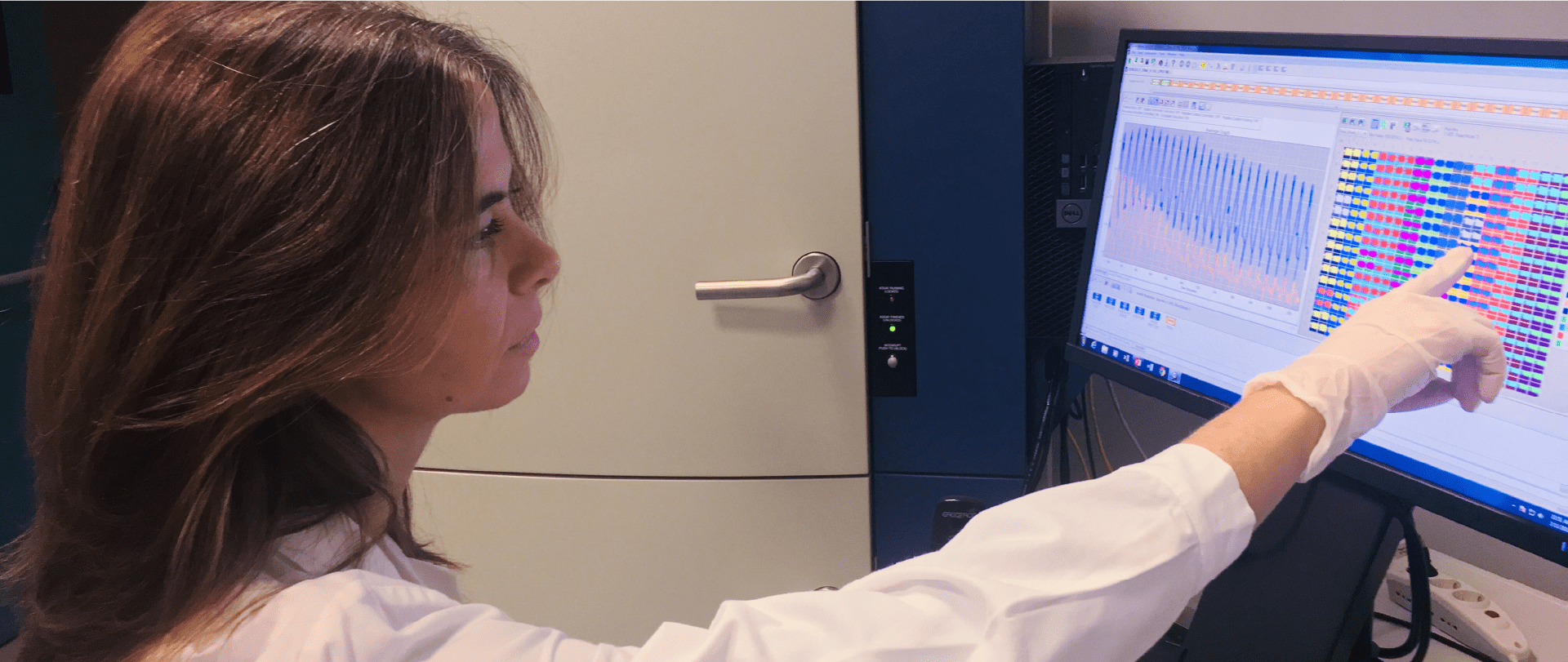
Optogenetics in Electrophysiology
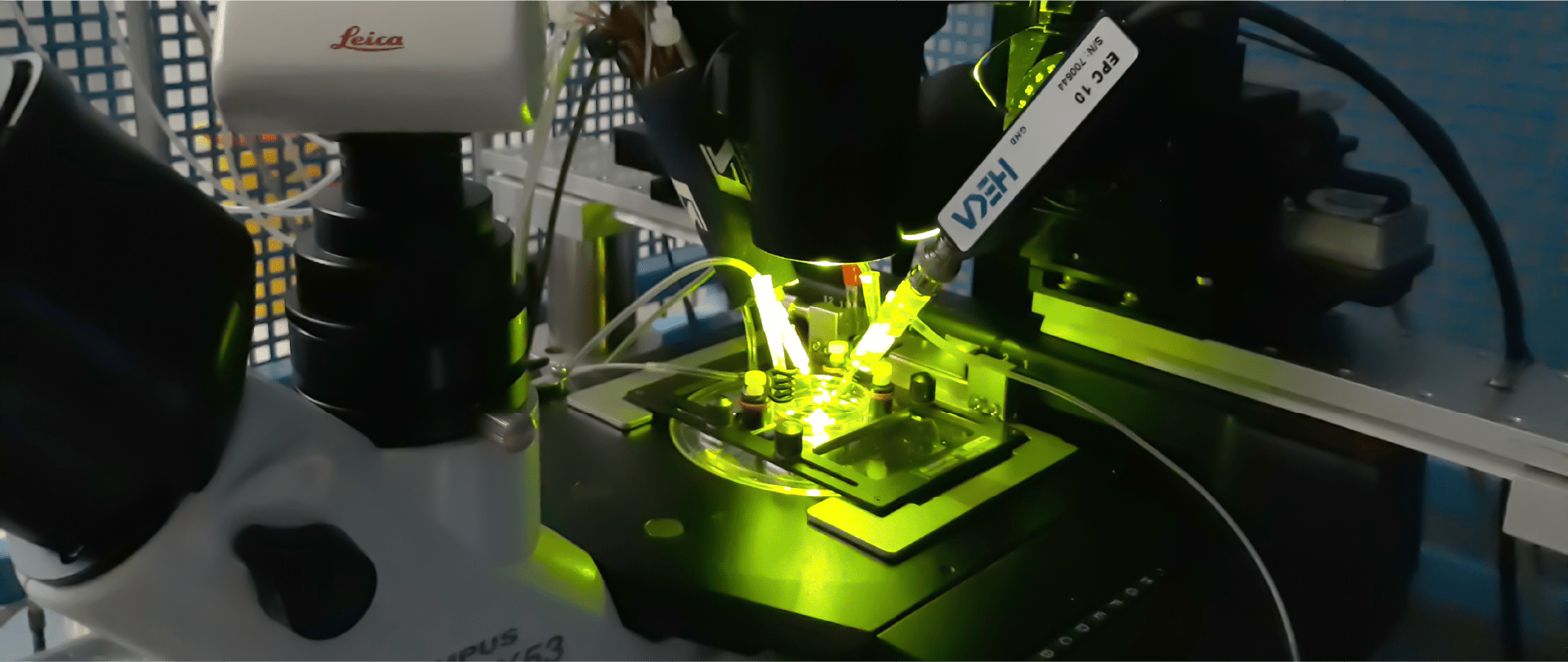
In addition, to complete the characterization of cell lines expressing optically controlled ion channels, we have also setup an “Opto manual patch-clamp platform”.
The system integrates a broad-spectrum LED illumination device that allows to deliver light pulses of programmable intensity, duration and wavelength while performing voltage- or current-clamp experiments. With this setup, we successfully check the purity of in-house engineered clones stably expressing light-gated channel (like Channelrhodopsin-2) alone or together with voltage-, ligand-gated ion channels (for instance NaV1.5).
This activity is mandatory not only to confirm the results obtained with the FLIPR Tetra® functional flux assay but also to establish a strong correlation between these techniques used along the drug discovery cascade. In parallel, optogenetic stimulation capabilities are also available on the SyncroPatch 384 and on the MEA Maestro Pro platforms through integrated OptoTool and Lumos™ modules respectively, enabling optical stimulation protocols in combination with high-throughput electrophysiological and network activity recordings.
How can we support your research programs?
We offer construction of optogenetic cell lines (both with light actuators and light sensors), which can be transferred to our clients or run as part of contract research studies at Axxam, including HTS campaigns with clients’ and/or Axxam compound collections.
Do you need more information on optogenetics?
To learn how optogenetics has revolutionized the drug screening world, read the following articles:
V. Agus et al., Springer (2024)
V. Agus et al., SLAS Discov (2021)
V. Agus et al., SLAS Discov (2018)
H. Zhang et al., Trends Biotechnol (2017)
V. Agus et al., Curr Opin Biotechnol (2017)