


Ciriaco Maraschiello | Axxam
Ciriaco Maraschiello is Chief Executive Officer of Axxam, a position he has held since January 2025 after joining the company as Chief Operating Officer in 2023. He brings more than 25 years of experience in the pharmaceutical R&D and Contract Research Organization sectors, with a strong background in ADME, preclinical safety assessment, formulation, and global operations. Throughout his career, Ciriaco has held scientific, managerial, and executive positions across the pharmaceutical R&D value chain, leading large international teams and operations across Europe and Asia. Prior to joining Axxam, he held leadership roles at organizations including Cidasal, RCC, Harlan, Aptuit, and Evotec. Ciriaco holds a PhD in Biochemistry, completed within the framework of a Marie Curie EU fellowship, and an Executive MBA from Bocconi University in Milan. His leadership approach combines scientific and operational expertise with a strong focus on people and value creation.
Blake Anson | FUJIFILM Cellular Dynamics
Dr. Blake Anson, PhD works within and leads aspects of a global team focused on developing custom human induced pluripotent cell (iPSC) platforms and partnering for FUJIFILM Cellular Dynamics, Inc.’s Discovery Research division. He has held strategic leadership roles across multiple stem cell and ex vivo platform developers and has been developing, commercializing, and implementing human iPSC-based cellular platforms for basic research and drug discovery, toxicity testing, and safety pharmacology for the past two decades. Dr. Anson received his doctorate in Neuroscience from the University of Oregon-Eugene, with postgraduate work in Molecular Genetics and Cardiovascular Cellular Physiology at the University of Wisconsin-Madison. He has authored over 30 peer-reviewed manuscripts and book chapters, taught Continuing Education courses within the Safety Pharmacology Society, has been active in the Society of Toxicology since 2005, and has served on the stem cell leadership council since 2020.

Silvia Cainarca | Axxam
Silvia has more than 20 years of experience in the drug discovery field and a strong background in cellular and molecular biology. She has followed discovery programs from assay setup and compound testing to Hit-to-Lead validation, with a focus on compound characterization during the optimization process in the Discovery Biology Unit as Principal Scientist. Her main areas of expertise include the development of functional cell-based assays using relevant cell types, the management of Hit-to-Lead programs, and the coordination of assay development activities alongside functional and epigenetic screening using iPSC-derived cells. She is the project leader for grants financed by the European Community and national and international funding bodies. She also serves as Principal Investigator in important collaborations with international clients and partners in the field of iPSC-derived cells.
Annina Denoth Lippuner | F. Hoffmann-La Roche
Annina Denoth Lippuner is a Senior Scientist at Roche Neuroscience and Rare Diseases (NRD) and the Institute of Human Biology (IHB), where she leads an early discovery platform and builds complex 3D cellular models for Alzheimer’s disease. She holds a PhD from ETH Zurich, followed by postdoctoral research at the University of Zurich and the Salk Institute, where she specialized in human brain organoids, stem cell aging, and models of neurodegeneration. Today, her work at Roche focuses on developing novel therapeutic approaches for neurodegenerative diseases, with a strong emphasis on advancing innovative Abeta clearance modalities and complex human iPSC-derived cellular models of neuroinflammation.
Alexandre Santinho | ORIA Bioscience
Dr. Alexandre Santinho is Co-founder and CEO of ORIA Bioscience, a Paris-based deep-tech biotech specializing in the industrial-scale purification of functional organelles for drug discovery. He holds a PhD in Cell Biology and Biophysics from École Normale Supérieure - PSL, where he studied the biomechanical properties of cell membranes and organelles. During his postdoctoral work at the CNRS, he continued his PhD research and co-invented a patented microfluidic platform for organelle extraction and purification, together with medium-throughput methods to characterize ion channels and transporters. In 2024, he co-founded ORIA Bioscience to translate this technology into an innovative tool for the drug discovery community. As CEO, he leads the company’s direction and international collaborations, working with academic and industry collaborators across neurodegeneration, oncology, immunology, and rare diseases.
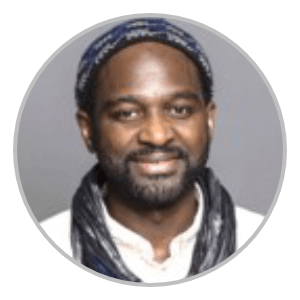
Abdou Rachid Thiam | French National Centre for Scientific Research (CNRS), ENS Paris and ORIA Bioscience
Prof. Abdou Rachid Thiam is a biophysicist and Research Director at the French National Centre for Scientific Research (CNRS) and the École Normale Supérieure (ENS) in Paris. He holds an engineering degree in physics from ESPCI Paris and a PhD in Applied Physics from Université Pierre et Marie Curie, where he specialized in the stability of microfluidic emulsions. He then conducted postdoctoral research at Yale School of Medicine with Nobel laureate Prof. James E. Rothman, studying intracellular vesicle trafficking. Since 2014, he has led a multidisciplinary research team exploring the biophysics of lipid droplets and their interactions with other organelles, including the endoplasmic reticulum, mitochondria, and lysosomes. He served as Chair of the Biophysics Department at ENS from 2020 to 2024. In 2024, he co-founded ORIA Bioscience, where he now serves part-time as Chief Scientific Officer, advising the R&D team. He also holds several patents in membrane biology and microfluidics. His research has earned wide recognition, including the CNRS Bronze Medal, the Claude Paoletti Prize, the Thomas E. Thompson Award from the Biophysical Society, election as an EMBO Member, and the Liliane Bettencourt Prize for Life Sciences. He is also committed to promoting science among underserved communities in France and Senegal.
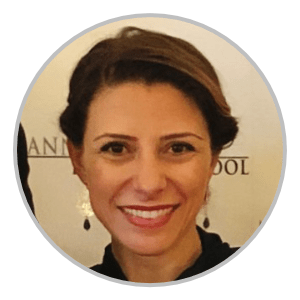
Emma David | Axion Biosystems
Emma David holds a PhD in Neuro-Genetics from Paris Descartes University and an Executive MBA from ESSEC and Mannheim Business School. Combining scientific depth with commercial leadership, she has spent more than a decade driving B2B growth in the life-sciences sector across EMEA. Since 2021, as Senior Territory Sales Manager at Axion Biosystems, she promotes medical devices and digital solutions for in-vitro neural and cardiac assays based on iPSC models. She partners with pharmaceutical companies, biotechs, academic groups, CDMOs and CROs offering the best solutions and technologies for Life-Cell Assays.
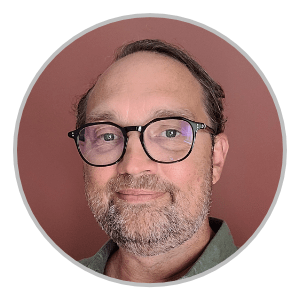
Arnaud Jacquier | Lyon University
Arnaud Jacquier is an INSERM researcher affiliated with Université Claude Bernard Lyon 1 and the Hospices Civils de Lyon. His research focuses on rare neuromuscular diseases, with a particular interest in the identification of new genetic causes, disease mechanisms, patient-derived cellular models, innovative therapeutic approaches, and biomarkers. He obtained his PhD in Neuroscience from Aix-Marseille University in 2008 and completed a postdoctoral fellowship at Columbia University in New York from 2008 to 2011. He received his Habilitation à Diriger des Recherches (HDR) in 2024 and a University Diploma in Medical Education in 2025. Dr. Jacquier has authored scientific publications in leading journals including Brain, Acta Neuropathologica, PNAS, Cell Reports, Nature Communications, and Nature Neuroscience. He contributed to the development of the iPS-PGNM platform at the Institut NeuroMyoGène in Lyon. His work has resulted in several patents, research collaborations and translational projects aimed at improving the diagnosis and treatment of rare neuromuscular diseases. Alongside his research, he is actively involved in medical and scientific education at Université Claude Bernard Lyon 1, as well as in national and international neuromuscular disease networks. His overarching goal is to bridge fundamental research and clinical practice to improve patient diagnosis, care and quality of life.
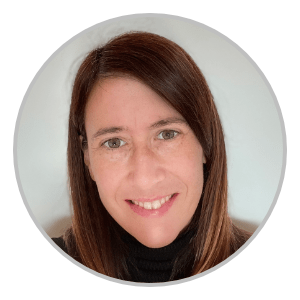
Anna Mondini | Axxam
Anna has extensive expertise in electrophysiology and ion channel assays for drug discovery. She joined Axxam in 2014 and is currently Head of Electrophysiology, where she leads efforts to develop and implement ion channel screening platforms, leveraging advanced techniques to support the identification of novel therapeutics.
Anna’s passion for ion channel research began during her PhD at the University of Milan, where she focused on renal and pulmonary chloride channels involved in diseases such as autosomal dominant polycystic kidney disease (ADPKD) and cystic fibrosis. Using electrophysiological methods and calcium imaging, she explored the molecular mechanisms underlying these pathologies. Following her PhD, Anna conducted postdoctoral research at Cardiff University, where she further investigated the role of chloride channels in disease contexts, strengthening her expertise in functional assays and imaging technologies.
In her current role at Axxam, Anna combines her academic knowledge with industrial innovation to develop ion channel assays for drug discovery campaigns. She has contributed to advancing high-throughput electrophysiology platforms and integrating physiologically relevant models into screening workflows.
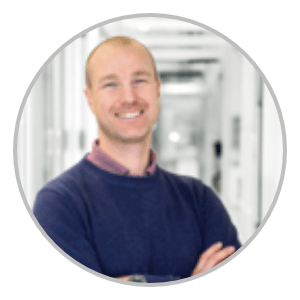
Moritz Mall | German Cancer Research Center (DKFZ)
Dr. Moritz Mall is a Division Head at the German Cancer Research Center (DKFZ) and a founding member of the Hector Institute for Translational Brain Research (HITBR). His lab studies cellular plasticity, the process through which cells change identity, which is central to cancer and developmental disorders. Using stem cell and organoid models of the brain and liver, his team investigates the genetic and epigenetic control of disease transitions to discover new treatments.
Dr. Mall studied in Munich and Zurich, earned his PhD at EMBL Heidelberg, and trained at Stanford University as a postdoctoral fellow. He has received several awards, including ERC Starting and Proof of Concept grants, as well as the 2025 Hella Bühler Prize and the 2026 Sibylle Assmus Prize for cancer research.
In addition, Dr. Mall is committed to outreach and translational science. He actively supports families affected by rare autism-associated disorders and works closely with patient communities. His team’s research has already contributed to compassionate-use therapies, showing how patient-driven science can help bring targeted treatments to the clinic.
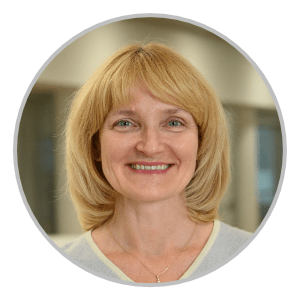
Liudmila Polonchuk |F. Hoffmann-La Roche
Dr. Liudmila Polonchuk is a Senior Principal Scientist at the Roche Innovation Center in Basel with 25 years of industrial experience in drug development. She obtained her PhD in Natural Sciences from the Swiss Federal Institute of Technologies in Zürich. Throughout her career, Dr. Polonchuk has remained passionate about advancing pharmaceutical research through innovative, translational science using human cell models. Her extensive expertise spans patch clamp methodologies, integrative pharmacology, drug safety, and computational biology, with a particular focus on implementing robust, human-relevant models to improve the cardiac safety assessments.